
Intro: Women aren’t just reshaping science, they are rewriting the rules of global research power. From Spain’s soaring gender-equity gains to Australia enforcing equal grants for women and men, the world is shifting fast. And behind that momentum are leaders who refuse tokenism, dismantle bias and demand real seats - with microphones. In this conversation, science diplomacy expert Leena Arora Kukreja exposes the data, the systems, the barriers and the breakthroughs no one talks about… but everyone should. So this week on Socio-economic Voices, senior journalist Mahima Sharma talks exactly about that with her and more. An exclusive only at Indiastat.
MS: In recent months, there’s been growing recognition of women leading scientific collaborations — including the International Centre for Genetic Engineering and Biotechnology’s move to strengthen women’s role in STI agendas. From your experience, what are the most effective ways to embed women leaders into the core of international research funding calls and partnerships, rather than treating them as token participants?
LAK: Gender imbalance weakens scientific progress because having fewer women researchers limits the range of perspectives and lived experiences that shape research. Promoting inclusivity therefore needs to be rooted in evidence and real-world data.
Horizon Europe has issued detailed guidance on gender-equality plans for research funding agencies. The framework offers specific examples, tested good practices and a variety of tools to help advance gender equality in research and innovation at both national and institutional levels.
She Figures is a flagship publication of the European Commission that presents statistical evidence on gender equality in research and innovation across Europe. Published every three years, it monitors the representation and career progression of women in academia, research and leadership roles. It reviews indicators such as the share of women researchers, gender pay disparities and access to research funding. Since its first release in 2003, She Figures has served as the main source of comparable, Europe-wide gender data and continues to guide policymakers, institutions and stakeholders in shaping gender-inclusive reforms in research and higher education. Spain has been a leader in gender-equality measures, backed by strong legislation supporting women in research. The She Figures 2024 report highlights Spain’s high proportion of women researchers, especially in the social sciences and humanities. The country’s efforts to narrow the gender pay gap, improve work-life balance and introduce gender quotas in research institutions have all supported steady improvements, including increased female representation in decision-making roles.
The most effective way to bring more women researchers into leadership is by ensuring they are seen and heard. While planning or participating in any event, it is essential to actively review gender balance on sessions and panels. Declining all-male panels should become standard practice. Women need not only a seat at the table but also a microphone in their hands.
In Nordic countries, social and media scrutiny puts strong pressure on organisers to maintain gender balance in discussions and presentations. Organisations that host “manels” often face public criticism. India needs a similar cultural shift. Too often, women appear only as moderators or emcees, which amounts to tokenism. A higher presence of women scientists at conferences and on review panels directly translates to stronger female participation in international research funding programmes. In many joint funding calls, applicants are now required to report the gender composition of their research teams and outline how they plan to advance gender equality within them.
MS: A new study on French astronomy shows the “leaky pipeline” still hits hardest at senior research roles. From your experience, what barriers keep women from rising into top leadership in research funding or partnerships and what examples have you seen of these barriers being actively broken?
LAK: The main barrier that I see is institutional gender bias. There are not enough voices asking for a change in the stereotypes. Institutional mindsets are hard wired and men (also some women) do not have respect for women leaders. In 2016, we organised a UK-India-Australia workshop on Women in STEMM which brought together key stakeholders and experts from all the three countries.
As an outcome, the Government of India created specific funding programs for women scientists to mitigate gender disparity in funding allocation. The GATI program - Gender Advancement for Transforming Institutions is a great initiative by the Department of Science and Technology to promote gender equity in STEM. It was launched as a pilot, inspired by the UK’s Athena SWAN framework and Australia’s SAGE program. An important feature of Project GATI is that it will not just assess, accredit and recognise institutions through Certification and Awards. It would also engage, mentor, partner and support institutions as they work towards reaching the global best practice gender equality.
The BioCARe Fellowship, under the Department of Biotechnology (DBT), aids women scientists in biotechnology and allied fields, helping them build a successful research career.
To further support women entrepreneurs, the National Initiative for Developing and Harnessing Innovations (NIDHI) offers capacity building, mentorship and seed funding, including through its NIDHI-Seed Support Program (NIDHI-SSP), which provides early-stage funding for women-led startups.
MS: Science diplomacy now stresses inclusivity and gender equality, including examples like Tunisia and South Africa. In the programmes you’ve worked on, how has gender leadership been assessed—through consortium leadership, decision-making roles or mentoring networks within funded partnerships?
LAK: Promotion procedures for inclusiveness, including ensuring review panels are gender balanced. An increasing number of research funding agencies have experimented with blind review process (often double blind) to mitigate gender bias and ensure fairness in grant selection. Double-blind peer review is a system where both the author and the reviewers are anonymous to each other during the evaluation process. This is intended to reduce bias based on factors like the author's institution, gender or nationality, ensuring the manuscript is judged solely on its academic merit. To maintain anonymity, authors must prepare their manuscripts carefully by removing all identifying information. Gender bias in peer review is a highly debated issue amongst researchers. Several studies suggest gender differences across academic environments, with men often receiving more favourable evaluations than women, though some researchers challenge these broad inequality claims. A double-blind peer-review process can reduce such biases. Equally important is strengthening gender diversity within editorial boards and reviewer groups to ensure broader perspectives.
The National Health and Medical Research Council (NHMRC) of Australia introduced a key gender-equity measure in its flagship Investigator Grant scheme from 2023, setting a target to award equal numbers of grants and funding to women and men across career stages. Before finalising this shift, NHMRC examined several options to improve gender-equity outcomes, such as:
The Investigator Grant scheme, NHMRC’s largest funding programme, provides around $370 million annually to support 5-year fellowships and research projects for leading health and medical researchers. Although earlier interventions reduced gender gaps at junior levels, major disparities continued at senior levels, with systemic barriers leading to male applicants receiving roughly 35% more grants and 67% more total funding than female applicants between 2019 and 2021.
MS: Given the competition for top research funding and talent mobility, how do you see women’s leadership being impacted by global research-funding competition (e.g., fewer mobility slots, fewer lead-partner roles)? And what strategies have you used (or seen used) to address this imbalance?
LAK: The barriers women face in obtaining leadership positions will be exacerbated by the scarce landscape of funding. There is also lack of mentorship from research leaders and institutional gatekeeping leading to less women being signposted to opportunities and being overlooked. It is also important to note that during Covid-19 pandemic, the childcare obligations for most women increased and many women could not get back to work when lockdown opened.
Tackling the leaky pipeline therefore should have involved an intersectional approach. To mitigate the effects of global research funding cuts, it is important to diversify funding sources - look at both private sector funding and philanthropic funding. From a talent mobility perspective, it is crucial to build strong networks and engage in developing a diverse skill set. Given the limited leadership roles in the sector, women can explore alternative career pathways in industry, public sector and the non-profit sector.
MS: Mentorship and networks matter a lot, especially for women. Can you share a recent example (in the last 3?months) where you facilitated or witnessed a mentorship or women-leadership initiative (within a research funding partnership) that made a clear difference — what made it successful?
LAK: Research by Engineering UK showed that a whopping 73% of 11–14-year-olds don’t know what engineers do, 69% of parents don’t know what engineers do and 42% of teachers don’t feel confident giving engineering career advice. Is it any wonder then that there isn't enough people choosing to pursue STEM and go into STEM careers, like engineering? The importance of surrounding young girls (and boys) with a diverse set of role models is important to plug the skills shortage problem. During my tenure with the Embassy of Sweden in Delhi, we conceived a mentorship program that is very close to my heart - SHE STEM. We partnered with Atal Innovation Mission, Niti Aayog, Government of India to celebrate women in STEM, bring role models to school students in India. For students to hear from and interact with a drone maker to an Autonomous vehicle designer, from a space scientist to a woman leader in mathematics and coding. The key objective was to encourage young girls to join and pursue careers in the field of STEM by exposing them to strong women leaders from varied sectors. It challenges the perception that STEM is a male dominated field and breaks stereotypes.
The success of SHE STEM was largely because of partnering with Atal Innovation Mission who had access to multiple schools across the countries through its Atal Tinkering labs. An innovation challenge was also launched as a part of the project to encourage young boys and girls to submit their ideas/pitch.
Personally, through my line of work, I have the privilege of working with many amazing and talented women leaders around the globe. Some of them have been incredible mentors that I was fortunate to have in my career. Having the right role model/s is very crucial to make the right career choices, but also to achieve your full leadership potential.
MS: In your role interfacing with international research-funding partners, what leadership competencies do you believe are most under-recognised among women in science-technology partnerships (for instance negotiation, interdisciplinary bridging, stakeholder diplomacy)? And how do you build or encourage them?
LAK: Research from Leadership Circle, based on assessments with over 84,000+ leaders and 1.5 million raters (comprising boss, boss’s boss, peers, direct reports and others). This shows that female leaders show up more effectively than their male counterparts across every management level and age level. Women leaders have a higher rate of empathy, eye for detail and more commitment to compliance and governance matters.
In bilateral or multilateral research projects there is a need for consensus-based decision making. Women leaders often prioritise a participatory and inclusive work environment that fosters cooperation amongst members. Female researchers are breaking up the ‘All boys club’, they are travelling across the globe, are not afraid to be the loud voice on the table and are getting the job done.
A 2022 study led by social psychologist Mansi P. Joshi, PhD, found that organisations were expected to offer fairer treatment and higher future salary and status simply when a woman, rather than a man, occupied the leadership role. Women leaders signalled organisational trust across both male- and female-dominated sectors and at various hierarchical levels. My guidance for early-career women researchers is this - it is your responsibility to speak about your work, engage with the media and share your results. Keep your funders, your institution and your project collaborators informed. Stand up for your ideas, build networks with other women scientists and uplift one another.
MS: From your experience, what are three design elements you would recommend to ensure women are not just included but leading (for example: gender-balanced leadership criteria, dedicated leadership-pipeline funding, etc.)?
LAK: I would suggest a three-step plan:
MS: From the vantage of someone working across countries and funding partners, how do you handle the challenge of cultural or institutional norms (in partner countries) that may pose barriers to women’s leadership? And what tactics have you found successful in fostering leadership-growth across diverse settings?
LAK: One of the most effective approaches I have seen is bringing more male allies into the room and into the conversation. When men model change and intentionally step back to let a woman lead the dialogue, there is a visible systemic shift. It challenges long-held assumptions about who should speak, who should decide and who should lead. Working with Nordic countries has also shaped my perspective.
In environments where feminist policies are the norm rather than the exception, I have seen how intentional structures make leadership growth possible for everyone. There is a clear understanding that childcare is a shared responsibility, not a burden carried disproportionately by women.
I was inspired to witness concepts like Sweden’s “latte dads,” where fathers take extended parental leave and participate visibly in caregiving, are common and celebrated and there is no stigma attached to a man taking time for his family. As a result, there is no penalty for women pursuing their careers. This reinforces an essential truth: when institutions normalise equality, individuals no longer have to fight for it. Across contexts, the tactics that work include creating space for visible male allyship, highlighting global models that demonstrate what is possible when policies align with values, reframing leadership development as a shared societal goal and promoting systems where caregiving does not derail careers for any gender.
My own journey has reinforced these lessons. Early in my career, I often found myself navigating rooms where I was the only woman and it was the presence of a few influential male champions who opened doors and actively amplified my voice that made a measurable difference. When I was unsure about accepting a leadership position, it was one of my male mentors who pushed me by reminding me that a man would not have thought twice and in that moment I realised how easily we slip into imposter syndrome and how powerful external belief can be in shifting internal narratives. Later, leading multicultural teams taught me that inclusion rarely happens by accident. It comes from intentional choices about who gets visibility, who gets mentorship and who gets encouraged to lead..
MS: Women scientists or research-funding professionals aspire to take on leadership at the intersection of research, funding and international partnerships. What mindset shifts and practical actions would you say were most pivotal in your experience?
LAK: Closed mouths don't get fed. Be assertive and proactive, silence only leads to missed opportunities and no recognition. As leaders, we often underestimate the power of mindset. The shift from scarcity to abundance is one of the most transformative moves we can make. Perfection is not the currency of progress. In a world that moves quickly, “quick and aligned” often beats “slow and perfect.” Leadership requires the agility to act with clarity even when conditions are not ideal. But with responsibility comes weight. The mental toll of leadership is real and ignoring it only narrows our perspective. Protecting time for play, wellness and genuine human connection is not optional. It is strategic. The best leaders do not just manage. They nurture. They walk the floor, connect beyond the layers of hierarchy and build cultures where people feel seen and heard. We must also resist slipping into a victim mindset. Growth comes from agency and ownership, not from playing the gender card or limiting ourselves through assumptions about how the world sees us.
Leadership is not a static state. Craft matters. Constantly sharpening the axe and investing in our skills, perspectives and emotional resilience is what keeps us relevant and impactful. Celebrating our wins is not indulgence. It is acknowledging the milestones that strengthen our confidence and clarity. Eventually, leadership requires that we widen the circle. When the season is right, we transition from accumulating wisdom to distributing it by mentoring, sponsoring and elevating other women. This is how we multiply impact. This is how we build legacy.
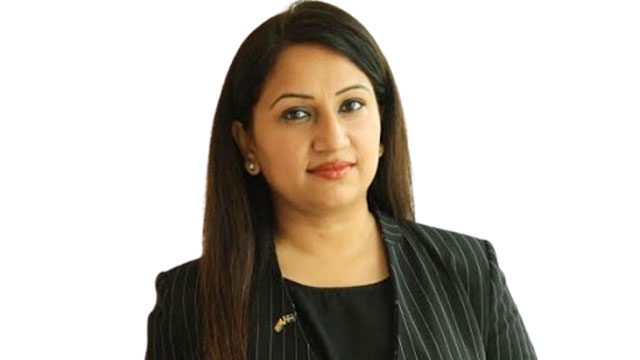
About Leena Arora Kukreja
Leena Arora Kukreja is a seasoned leader in international science diplomacy with 18+ years of experience shaping global collaboration in research, innovation and education. She has held senior public-sector advisory roles, driving major bilateral research and innovation programs and strengthening scientific exchange and academic mobility with global partners. As Regional Managing Director of Coventry University Group’s India Hub, she launched its sixth global hub in New Delhi. A PiE Top 50 Voice of 2025, she also represented India at the 2021 AAAS–TWAS Science Diplomacy course.
About the Interviewer
Mahima Sharma is an Independent Senior Journalist based in Delhi NCR with a career spanning TV, Print, and Online Journalism since 2005. She has played key roles at several media houses including roles at CNN-News18, ANI, Voice of India, and Hindustan Times.
Founder & Editor of The Think Pot, she is also a recipient of the REX Karmaveer Chakra (Gold & Silver) by iCONGO in association with the United Nations. Since March 2022, she has served as an Entrepreneurship Education Mentor at Women Will, a Google-backed program in collaboration with SHEROES. Mahima can be reached at media@indiastat.com
Disclaimer : This interview is the personal opinion of the interviewed protagonist and not those of the organisation he/she works for. The facts and opinions appearing in the answers do not reflect the views of Indiastat or that of the interviewer. Indiastat does not hold any responsibility or liability for the same.
The Indian economy is seen growing strength to strength on the back of meaningful and effective reforms undertaken by the government for trade, industry and people... Read more